
Testimony · Oct 27, 2026
B26-0671 and the Juvenile Presumption of Pretrial Detention
Joshua Miller · Open City Advocates
Before the Committee on the Judiciary and Public Safety
Council of the District of Columbia
Public Hearing on B26-0671, the Protecting Victims Amendment Act of 2026
October 27, 2026
Oral Testimony of Joshua Miller, PhD, Research & Advocacy Director
Good morning, Chairperson Pinto and members of the Committee. I am Joshua Miller, Research and Advocacy Director at Open City Advocates. We represent children committed to DYRS.
D.C. has built a ratchet into detention policy. Presumptions expand, expiration dates move, and overcrowding becomes an argument for more beds. Section 4(a) would turn the ratchet again by making the expanded juvenile presumption permanent.¹
In 1992, the District began dismantling money bail. Detention survived the reform. In federal samples of D.C. felony cases, the share denied bail jumped from 2 to 15 percent, while the total held through disposition barely moved, from 30 to 32 percent.² We changed how we justified holding people.
The Pretrial Services Agency’s recent figures show the scale of detention today. In 2016, 21 percent of felony cases were held until disposition. That reached 40 percent in 2022 and stood at 34 percent last year. The 1,190 cases held last year were the most in a decade.³
For children, you expanded the presumption in 2023 and have kept extending it, each time with an expiration date. Once a judge finds a substantial probability of a qualifying offense, a child must overcome the presumption that detention is necessary, before trial.⁴ Now you are being asked to make that burden permanent.
You asked CJCC to compare newly eligible cases with comparable cases before the expansion. Its conclusion: “no meaningful analysis could be conducted.“⁵ Yet permanence is still on the table.
Meanwhile, DYRS reported that YSC held more than 98 youth on 344 days last fiscal year. Some newly admitted children slept on portable beds. The agency recorded 462 injuries to youth.⁶ DYRS has sought thirty more beds at New Beginnings. Beds are fungible across this system: transfers free space at YSC, and New Beginnings has also held children pretrial.⁷
Brute force has had more than thirty years to work. A Michigan study of pretrial juvenile detention found that it cut the likelihood of graduating high school by 38 percent and raised the likelihood of an adult arrest by 27 percent.⁸ OCA believes no child should be detained. You should be paying for community placements, supervision, and family support instead of building more capacity to lock children up.
Strike Section 4(a). Let the expansion expire on December 31. Judges will retain their existing detention authority.⁹ You can stop turning this ratchet. Thank you. I am happy to answer questions.
Source notes (not spoken)
- B26-0671, § 4(a), introduced text, line 153 (“Section 18(c)(2) is repealed”); D.C. Law 26-52, § 8(a) (expiration December 31, 2026).
- Bureau of Justice Statistics, Felony Defendants in Large Urban Counties, 1990, App. Table D, p. 26; Felony Defendants in Large Urban Counties, 1992, App. Table E, p. 45. D.C. felony filings, May 1990 (n=160) and May 1992 (n=103); small, unadjusted samples, not a census of the pretrial population.
- Pretrial Services Agency, Release Rates for Pretrial Defendants, FY2016–FY2025 fact sheets, p. 1 of each, felony columns (“Total Held Pretrial”). FY2016: 946 of 4,496; FY2022: 710 of 1,785; FY2025: 1,190 of 3,514. Counts are cases, not unique people.
- CJCC, An Analysis of Juvenile Pretrial Detention Before and After Secure DC (Sept. 2026), PDF p. 9, Table 2; D.C. Law 25-175, § 18(c); D.C. Code § 16-2310(a-1). PDF pages count the cover as page 1.
- Same CJCC report, PDF p. 17.
- DYRS, FY25 Performance Oversight Hearing Question Responses (Feb. 2026), p. 101 (Q171–172); p. 76 (injuries, not distinct children).
- Same, p. 54 (Q93); OIJJFO, Behavioral Health Services at the New Beginnings Youth Development Center (Oct. 27, 2025), pp. 3–4 and Chart 1 (changing facility uses, including Title 16 pretrial custody).
- E. Jason Baron, Brian Jacob, and Joseph Ryan, “Pretrial Juvenile Detention,” Journal of Public Economics 217 (2023), 104798, abstract (adult arrest by age 19; selection-on-observables design).
- D.C. Code § 16-2310(a); the sunset also leaves the older, narrower presumption in place.
Written Testimony of Joshua Miller, PhD, Research & Advocacy Director
Chairperson Pinto and members of the Committee: Open City Advocates represents children committed to the Department of Youth Rehabilitation Services. We submit this testimony on Section 4(a) of B26-0671, which repeals the December 31, 2026 expiration of the expanded juvenile presumption of pretrial detention and so makes that expansion permanent.¹ We ask the Committee to strike Section 4(a).
D.C. has built a ratchet into detention policy. Expansions arrive in moments of fear about crime. Expiration dates move, temporary powers become permanent, and overcrowding becomes an argument for more beds. The expiration date in current law gives the Council an occasion to interrupt that pattern. Section 4(a) would remove it.
In 1992, in the middle of the crime wave, the District began dismantling money bail. The reform is remembered for ending detention based on whether a defendant could pay. Detention survived it. In the Bureau of Justice Statistics’ samples of D.C. felony filings, the share denied bail rose from 2 percent in May 1990 to 15 percent in May 1992, while the share held on financial bond fell from 28 percent to 17 percent. The total held through disposition barely moved, from 30 percent to 32 percent.² The legal basis for holding people changed much more than the share of people held.
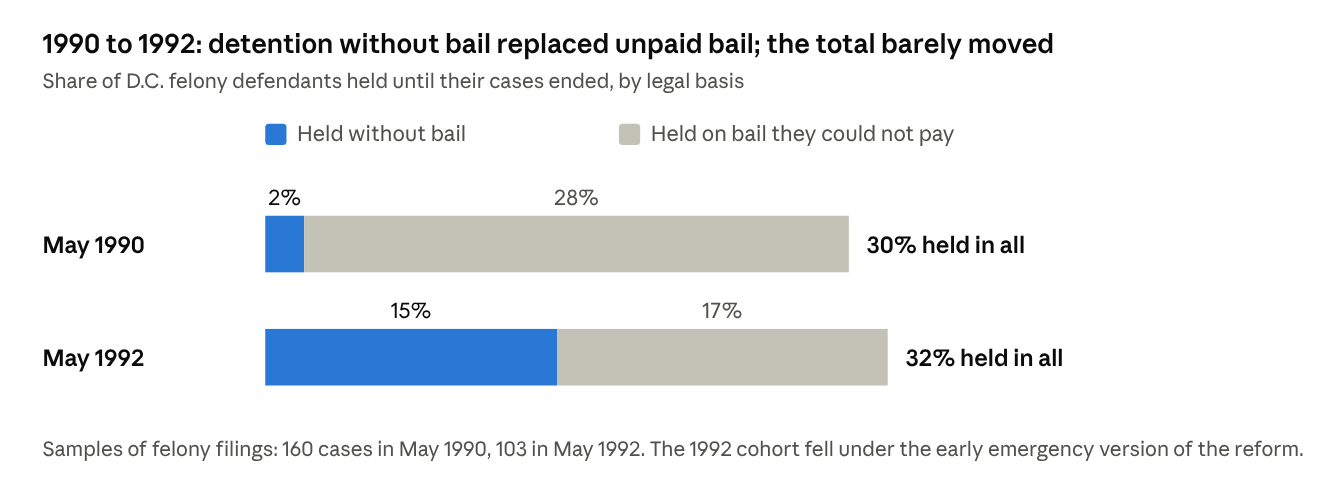
Figure 1 · BJS, Felony Defendants in Large Urban Counties, 1990 (App. Table D, p. 26) and 1992 (App. Table E, p. 45)
The jail was already full. Since fiscal year 1989, the District had been housing pretrial detainees at Lorton’s Modular Facility because of the cap on the jail population.³ By January 1995, Lorton held roughly 7,300 people, 44 percent over capacity.⁴ In 1997, with a federal control board overseeing the District’s finances, Congress passed the Revitalization Act, which required Lorton to close by the end of 2001 and transferred responsibility for the District’s sentenced felons to the federal Bureau of Prisons.⁵
The same pattern of expansion and renewal has played out for children over the last three years. In 2023, the Prioritizing Public Safety Emergency Amendment Act expanded the cases that trigger a rebuttable presumption of detention for a child. It added knives to the weapons that qualify a dangerous crime or crime of violence, and it made murder, first-degree sexual abuse, carjacking, and assault with intent to commit any of them presumptive with no weapon at all.⁶ The Secure DC Omnibus Amendment Act of 2024 carried that expansion forward with an expiration date, and the Peace DC Omnibus Amendment Act of 2025 moved the date to December 31, 2026.⁷ Each renewal kept an expiration date. Section 4(a) would remove it and make the expansion permanent.
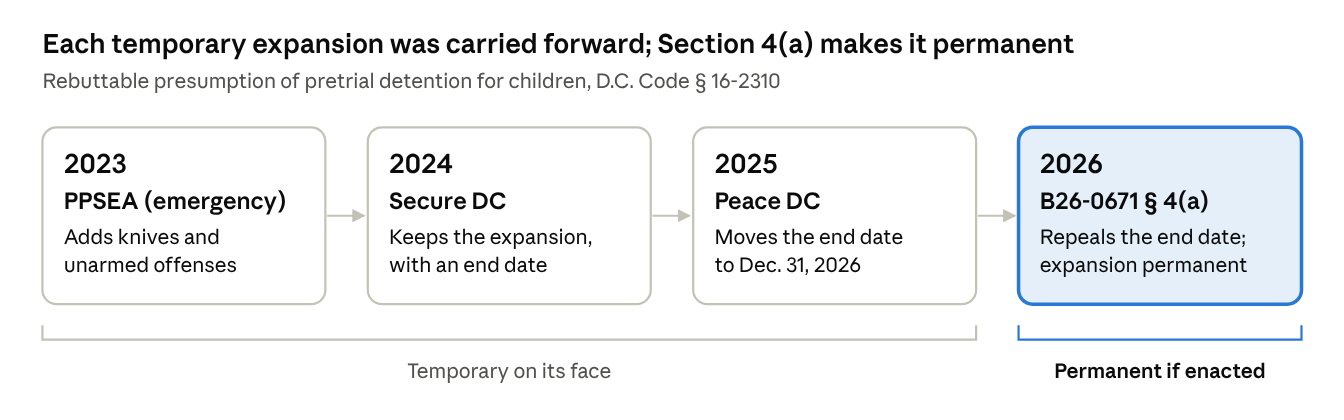
Figure 2 · Selected milestones · CJCC Sept. 2026 report, PDF p. 9, Table 2; D.C. Law 25-175 § 18(c); D.C. Law 26-52 § 8(a); B26-0671 § 4(a)
No consistent count links the early 1990s to today, but the Pretrial Services Agency’s recent figures show how extensive continued detention has become. Among felony cases filed in Superior Court, the share held until disposition was 21 percent in fiscal years 2016 and 2017 and about one in four in 2018 through 2020. It rose to 40 percent in fiscal year 2022 and still stood at 34 percent in fiscal year 2025. The 1,190 felony cases held until disposition in fiscal year 2025 were the most in the ten years of data.⁸
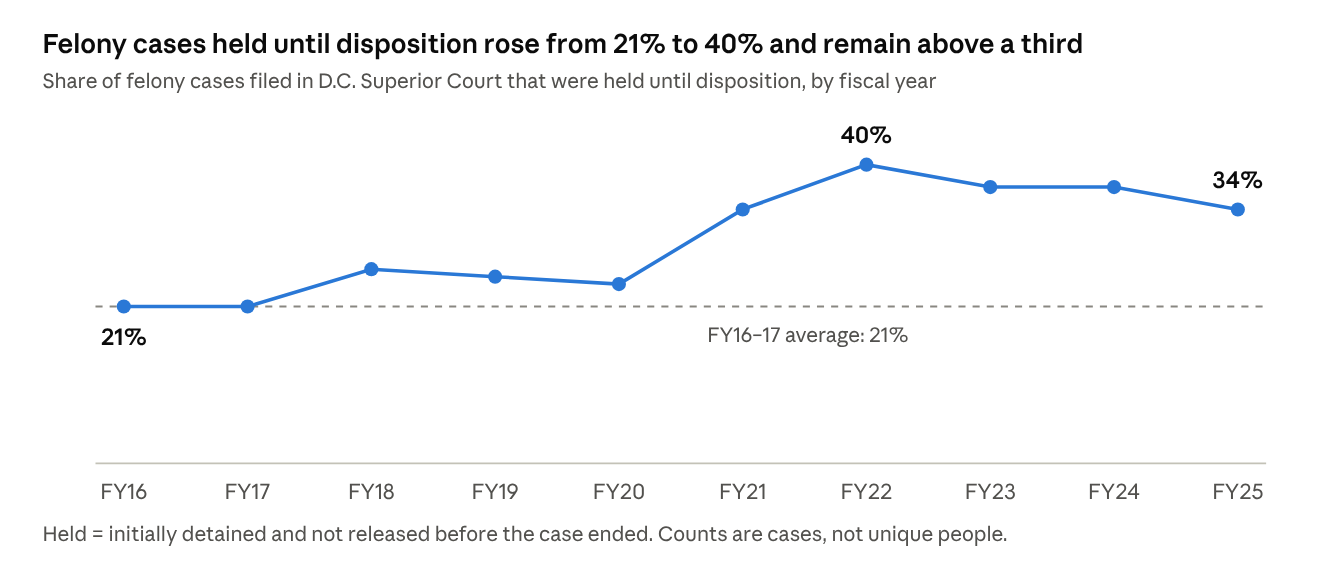
Figure 3 · Pretrial Services Agency, Release Rates for Pretrial Defendants fact sheets, FY2016–FY2025, p. 1 of each, felony columns
The adult CJCC report documents another increase in detention. The Criminal Justice Coordinating Council followed adults charged with a crime of violence or dangerous crime who received a detention hearing, in three six-month intake windows of equal length. Before PPSEA, judges securely detained 52 percent of them. After Secure DC, they detained 65 percent, and the number held after a hearing rose from 203 to 409.⁹ Among the defendants released after those hearings, few were rearrested for a papered offense in any period: 6 percent before PPSEA and 3 percent after Secure DC.¹⁰ The later cohort had both more detention hearings and a higher detention share. The report does not establish that the law caused these changes or that it prevented crime.
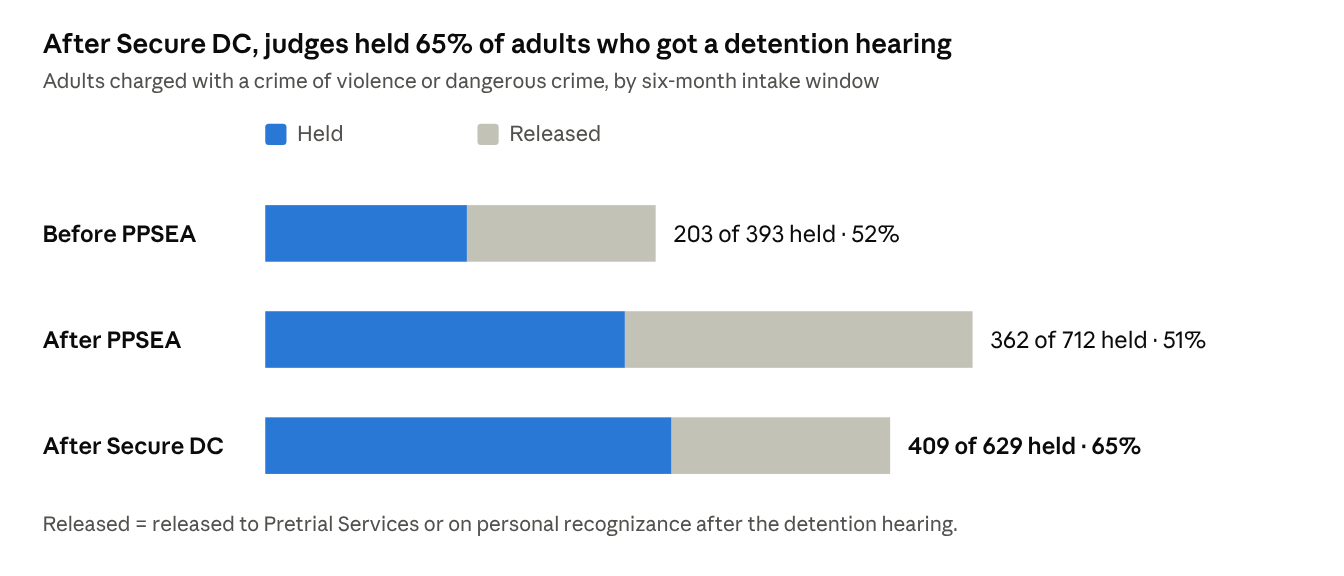
Figure 4 · CJCC, An Analysis of Pretrial Detention Before and After Secure DC (May 2025), Table 8, PDF p. 15 · cases, intake Aug.–Jan. of 2022–23, 2023–24, 2024–25
For children, the presumption shifts the burden before the case has been tried. Once a judge finds a substantial probability that a child committed a qualifying offense, the law presumes that detention is necessary to protect others, and the child must overcome that presumption. In September, CJCC reported that release was the most common initial placement for children who qualified for the presumption before PPSEA, and that secure detention has been the most common placement in both periods since.¹¹
CJCC tried to compare cases made newly eligible by these laws with comparable cases before them. It reported that “no meaningful analysis could be conducted.“¹² The report also does not measure what detention costs children in school, in family connection, or in safety while in custody. The Council is being asked to make the expansion permanent while its public-safety benefit remains unresolved. The ratchet does not wait for the answer.
YSC is already crowded. In its February 2026 performance oversight responses, DYRS reported that YSC held more than 98 youth on 344 days of fiscal year 2025, and on every day of fiscal year 2026 through the response date. Newly admitted youth used portable beds until permanent rooms opened up.¹³ DYRS recorded 462 injuries to youth at YSC in fiscal year 2025.¹⁴
DYRS has sought thirty additional beds at New Beginnings.¹⁵ Beds are fungible across this system. Moving a committed child from YSC to New Beginnings frees a bed at YSC, and New Beginnings has also held children pretrial.¹⁶ Overcrowding at one facility creates pressure on the other. Expanding New Beginnings increases the system’s capacity to confine children, whatever designation the new beds carry.
Open City Advocates holds that no child should be held in detention, and we oppose building new secure capacity. When the response to crowding is to build more beds, the Council accommodates the demand for detention instead of addressing what keeps children confined. The children in custody need safe conditions now, and the Council should fund the community placements and support that make it possible for them to leave.
Brute force has had more than thirty years to work. Research on juvenile incarceration gives us reason to stop relying on it. Anna Aizer and Joseph Doyle studied more than 35,000 young people over ten years in a large urban county, using differences in incarceration decisions among effectively randomly assigned judges. They found that incarceration lowered high-school completion and raised adult incarceration among young people whose placement depended on the judge assigned.¹⁷ A Michigan study of pretrial juvenile detention specifically estimated a 38 percent decline in the likelihood of graduating high school and a 27 percent increase in the likelihood of adult arrest by age 19.¹⁸ These costs follow a child long after the case ends. The District should be paying for supervision, services, and family support instead of building more capacity to lock children up.
We ask the Committee to strike Section 4(a) and let the juvenile expansion expire on December 31, 2026, as current law provides. Letting the expansion expire will leave judges’ existing authority to detain for significant harm or court appearance intact.¹⁹ The Council should stop turning this ratchet.
Thank you for the opportunity to testify. Questions can be directed to me at joshua@opencityadvocates.org or 202-579-9312.
Notes
- B26-0671, § 4(a), introduced text, line 153 (“Section 18(c)(2) is repealed”); Peace DC Omnibus Amendment Act of 2025, D.C. Law 26-52, § 8(a) (Secure DC § 18(c)(2) now reads “Paragraph (1) of this subsection shall expire December 31, 2026”).
- Bureau of Justice Statistics, Felony Defendants in Large Urban Counties, 1990, App. Table D, p. 26; Felony Defendants in Large Urban Counties, 1992, App. Table E, p. 45. D.C. felony filings, May 1990 (n=160) and May 1992 (n=103). The May 1992 cohort reflects the early emergency version of the reform; samples are small and unadjusted. These rates are not a reconstruction of the total pretrial population across the Jail and Lorton.
- District of Columbia, Crime and Justice Report for the District of Columbia, 1991 (NCJ 140510), p. 29.
- Rep. Thomas M. Davis, Congressional Record, Jan. 9, 1995, p. E59.
- National Capital Revitalization and Self-Government Improvement Act of 1997, Pub. L. 105-33; U.S. GAO, District of Columbia: Issues Related to the Youngstown Prison Report and Lorton Closure Process, GAO/GGD-00-86 (Apr. 7, 2000), Background.
- Criminal Justice Coordinating Council, An Analysis of Juvenile Pretrial Detention Before and After Secure DC (Sept. 2026), PDF p. 9, Table 2. PDF pages count the cover as page 1.
- Secure DC Omnibus Amendment Act of 2024, D.C. Law 25-175, § 18(c); D.C. Law 26-52, § 8(a). Figure 2 shows selected milestones and omits intervening emergency and temporary enactments.
- Pretrial Services Agency for the District of Columbia, Release Rates for Pretrial Defendants, FY2016–FY2025 fact sheets, p. 1 of each, felony columns. “Held until disposition” is PSA’s “Total Held Pretrial”: cases initially detained and not subsequently released. FY2016: 946 of 4,496; FY2022: 710 of 1,785; FY2025: 1,190 of 3,514. Counts are cases, not unique people.
- Criminal Justice Coordinating Council, An Analysis of Pretrial Detention Before and After Secure DC (May 2025), Table 8, PDF p. 15; limitations, PDF p. 2. Intake windows: Aug. 1, 2022–Jan. 31, 2023; Aug. 1, 2023–Jan. 31, 2024; Aug. 1, 2024–Jan. 31, 2025. Detention counts are cases.
- Same, Table 9, PDF p. 16 (unique released defendants; rearrests papered for prosecution).
- CJCC, Sept. 2026 juvenile report, PDF pp. 5, 15. Underlying placement counts are withheld.
- Same, PDF p. 17. See also the reporting mandate, D.C. Code § 22-4234(b-10).
- DYRS, FY25 Performance Oversight Hearing Question Responses (Feb. 2026), p. 101 (Q171–172).
- Same, p. 76. The total counts injuries, not distinct children.
- Same, p. 54 (Q93).
- OIJJFO, Behavioral Health Services at the New Beginnings Youth Development Center (Oct. 27, 2025), pp. 3–4 and Chart 1 (changing facility uses, including Title 16 pretrial custody and committed youth awaiting other placements).
- Anna Aizer and Joseph J. Doyle Jr., “Juvenile Incarceration, Human Capital, and Future Crime: Evidence from Randomly Assigned Judges,” Quarterly Journal of Economics 130, no. 2 (2015): 759–803. The studied custody includes pretrial detention.
- E. Jason Baron, Brian Jacob, and Joseph Ryan, “Pretrial Juvenile Detention,” Journal of Public Economics 217 (2023), 104798, abstract (Michigan school and justice records; selection-on-observables design).
- D.C. Code § 16-2310(a); the expansion’s sunset also leaves the older, narrower presumption in place.
Free to quote and share with attribution.